
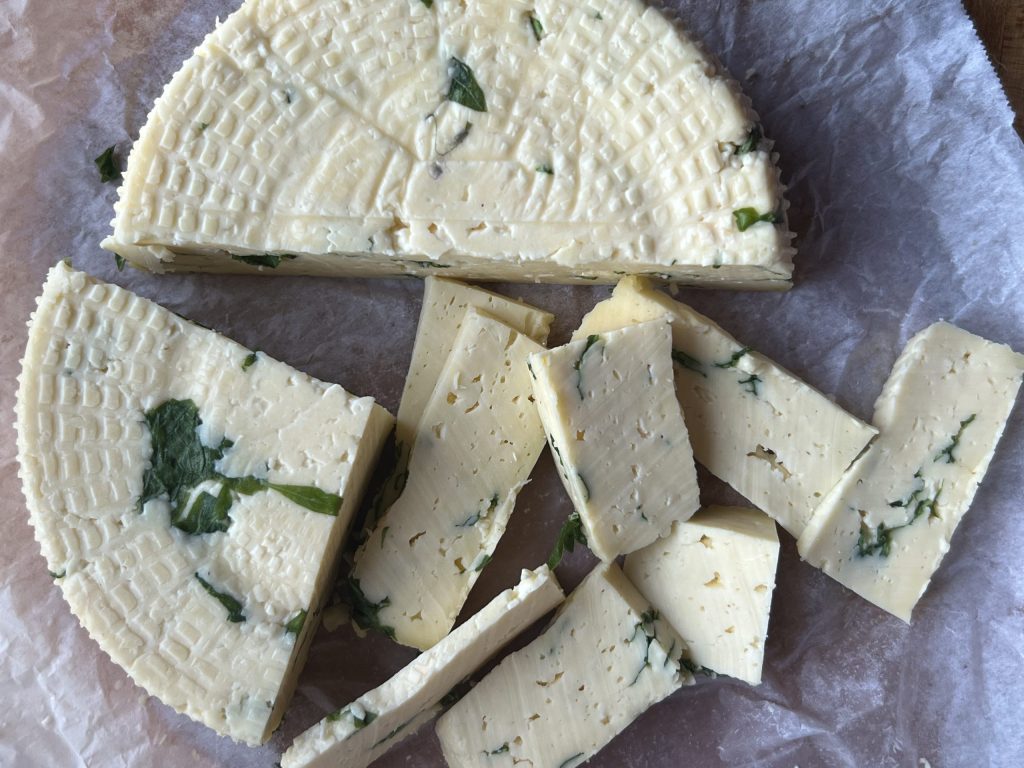
Panela is one of my absolute favorite Mexican cheeses. I didn’t realize how simple it was to make Panela until I learned how to make it myself. I have many fond memories of going to the Mexican grocery store with my mom and picking up some fresh tortillas, panela, and epazote. Then we would come home and make quesadillas de panela with a couple of epazote leaves. These quesadillas were the inspiration for this cheese.
Panela con Epazote
Panela con epazote is a cheese made with epazote, a herbaceous plant native to Mexico. This plant gives the cheese its distinctive earthy flavor. Panela is a mild, white fresh cheese and is not aged before being sold. Panela is a very simple cheese made with cow’s milk, calcium chloride, rennet and epazote. The cheese is soft, creamy, and slightly salty, and mild. Panela is a very simple cheese that is often used in Mexican dishes.
History of Panela con Epazote
The exact origins of queso panela is not exactly known. Queso Panela is also known as queso canasta. Canasta means basket in Spanish so queso canasta translates to ‘basket cheese’ in English. Canasta could be a reference to the baskets used to mold certain cheese. The shape of panela is actually similar to piloncillo. Piloncillo is commonly known as panela in other countries. Whatever the origin of panela, this cheese is delicious and simple to make.
How to Make Panela con Epazote
Making Panela con Epazote is easy and can be done at home with a few simple ingredients. To make the cheese, you will need cow’s milk, calcium chloride, rennet, and epazote. First, heat the milk to 95 degrees Fahrenheit, then add the calcium chloride and rennet.Then you need to cut the curds of the cheese, drain and salt the curds, and add the epazote. Let the curds dry out for about 10 minutes, then strain the cheese into a cheesecloth-lined colander. Then transfer it to a cheese mold and let it sit for a few hours.
The key to making homemade cheeses like this is getting milk that has not been treated with high heat. A good way to find non UHT milk is by using a milk finder like this one. I got my milk from a local source here in Homer. I have a weekly delivery of raw milk that I then pasteurize at low heat before making my cheeses. I like to get all of my cheesemaking supplies from New England Cheesemaking Supply Co. You can easily find all of the supplies needed for this cheese from their website.
Recipes to Make with Panela con Epazote
Panela con Epazote can be used to make a variety of delicious dishes. The cheese is great on tacos, burritos, enchiladas, nopal salad, and quesadillas. Panela doesn’t melt. It is similar to halloumi in that way. So, you can even simply enjoy it grilled. Panela is often sliced thick and put in tortas with avocado, lettuce, and other delicious toppings. I hope you enjoy cooking with this delicious cheese.
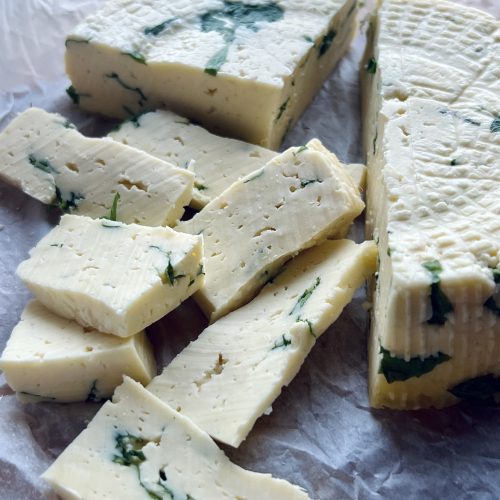
Panela con Epazote
Ingredients
- ½ gallon whole milk
- ½ tsp calcium chloride
- 35 drops of rennet
- 2 tsp fine salt
- ½ cup water
- Handful of epazote
Instructions
- Pour your milk into a pot and turn and slowly heat to 95F on medium heat.
- Dissolve calcium chloride in ¼ cup of water. Then, dissolve rennet in another ¼ cup of water.
- Once the milk has reached 95 degrees fahrenheit, turn the stove off.
- Add the calcium chloride and water mix to the heated milk and stir it until fully distributed.
- Next, add the rennet and water mix to the heated milk and stir it until fully incorporated.
- Cover the pot and let it rest until it curdles. This should take about 30-40 minutes. Do not mix the milk mixture as it sits.
- Once the curd has floated to the top, use a serrated knife to cut the curds into 1¼” squares and let it sit for 10 minutes more so the curds can heal.
- Ladle the curds into a colander lined with a cheesecloth; lightly salt, taking care to mix the salt in as the whey drains out. This is not a salty cheese so make sure not to over salt.
- Once the curds are dry add the epazote to the curds. Put the curds and epazote into a cheese mold if you have one. If you don't wrap the curds in the cloth and hang them or leave them in a colander. Leave the curds in the mold for a few hours until it's drained. You do not want the cheese to be too dry.
- Once the cheese is ready wrap in parchment or cheese paper and put it in a container in your fridge. The cheese should last 2-5 days.